

 Association of Citizens Civil Rights Protection
Since the very beginning of its creation, UNESCO has also been known as “the intellectual organisation”, providing a forum for exchanging ideas and scientific knowledge.
UNESCO led the movement to protect the environment and sounded the alert over the planet’s shrinking biodiversity. As early as in 1968, UNESCO organized the first intergovernmental conference aimed at reconciling the environment and development. The main outcome of that conference was the creation of UNESCO’s “Man and the Biosphere” programme. Through the MAB Program UNESCO sought to reconcile both the use and conservation of natural resources. It was the first step towards sustainable development.
In 1975, UNESCO developed the International Hydrological Programme (IHP), which is the only intergovernmental programme of the UN system devoted to water research, water resources management, and education and capacity building. Since its inception in 1975, IHP has evolved into a holistic programme to facilitate education and capacity building, and enhance water resources management and governance.
UNESCO is also the only United Nations organization with a mandate to support research and capacity in geology and geophysics, and the International Geoscience Programme is our flagship programme in that area.
And finally, UNESCO’s Intergovernmental Oceanographic Commission (IOC) promotes international cooperation and coordinates programmes in marine research, services, observation systems, hazard mitigation, and capacity development in order to better understand and effectively manage the resources of the ocean and coastal areas.
UNESCO and IOC actively advocate to highlight the link between ocean and climate change issues, as the importance of the ocean to global climate change cannot be underestimated.
The ocean regulates our climate and absorbs almost one third of our carbon emissions and an overwhelming portion of the excess heat. Also, the ocean is the largest and one of the most important life-support systems on this planet.
However, warmer atmosphere and increasing concentration of greenhouse gases, pollution from land, over-fishing, unsustainable coastal development and population activities, all exert an enormous pressure on the world’s ocean, its coasts and marine ecosystems.
Throughout 2015, UNESCO-IOC worked in close collaboration with the French authorities, as the host of the COP21 conference, to prepare a series of pre-COP21 events through which we put our expertise at the service of Member States, to help them identify recommendations and make informed decisions.
Lastly, UNESCO supports knowledge-based media development in order to contribute to peace, and sustainability.
Through the provision of capacity-building for journalists and broadcast media on climate change, for example, UNESCO aims to enhance public awareness and understanding of the causes and effects of climate change, and of what countries and communities can do to adapt to the impacts ahead.
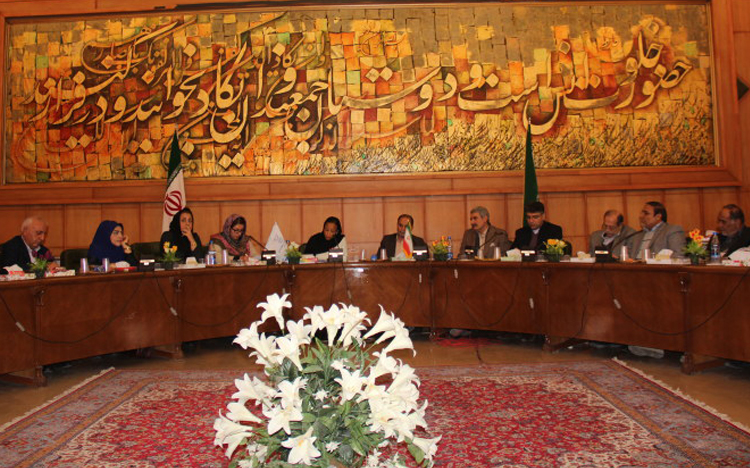
In 2015, the UNESCO Tehran Cluster Office organized a one-week training course on climate change reporting for Iranian journalists and media professionals in Tehran.
Overall, over 30 UNESCO programmes contribute to creating knowledge, educating and communicating about climate change, and to understanding the ethical implications for present and future generations.
The UNESCO Climate Change Initiative, launched in Copenhagen in 2009, brings together 4 core thematic areas: Science, Education, Ecology and Ethics. It aims to help Member States to mitigate and adapt to climate change, to educate for sustainable development, to assess the risks of natural disasters due to climate change, and to monitor the effects of climate change on UNESCO Sites (such as World Heritage sites and biosphere reserves).
In closing, ladies and gentlemen, I would like to say that throughout the past 7 decades, the Islamic Republic of Iran –one of the founding Member States of the United Nations- has been an invaluable partner of UNESCO, and has greatly contributed to all of our areas of work.
Today, there are 6 regional research and training centers under the auspices of UNESCO here in Iran; several UNESCO university chairs; 11 biosphere reserves; and 19 UNESCO World Heritage Sites.
We are immensely grateful for Iran’s continuous support in all of our programme areas.
